What Do the Olympic Symbols Represent? (Meaning Guide)
What do the Olympic symbols represent? Learn the meaning behind the five rings, Olympic flag, flame, motto, and cauldron—copyable emojis included.
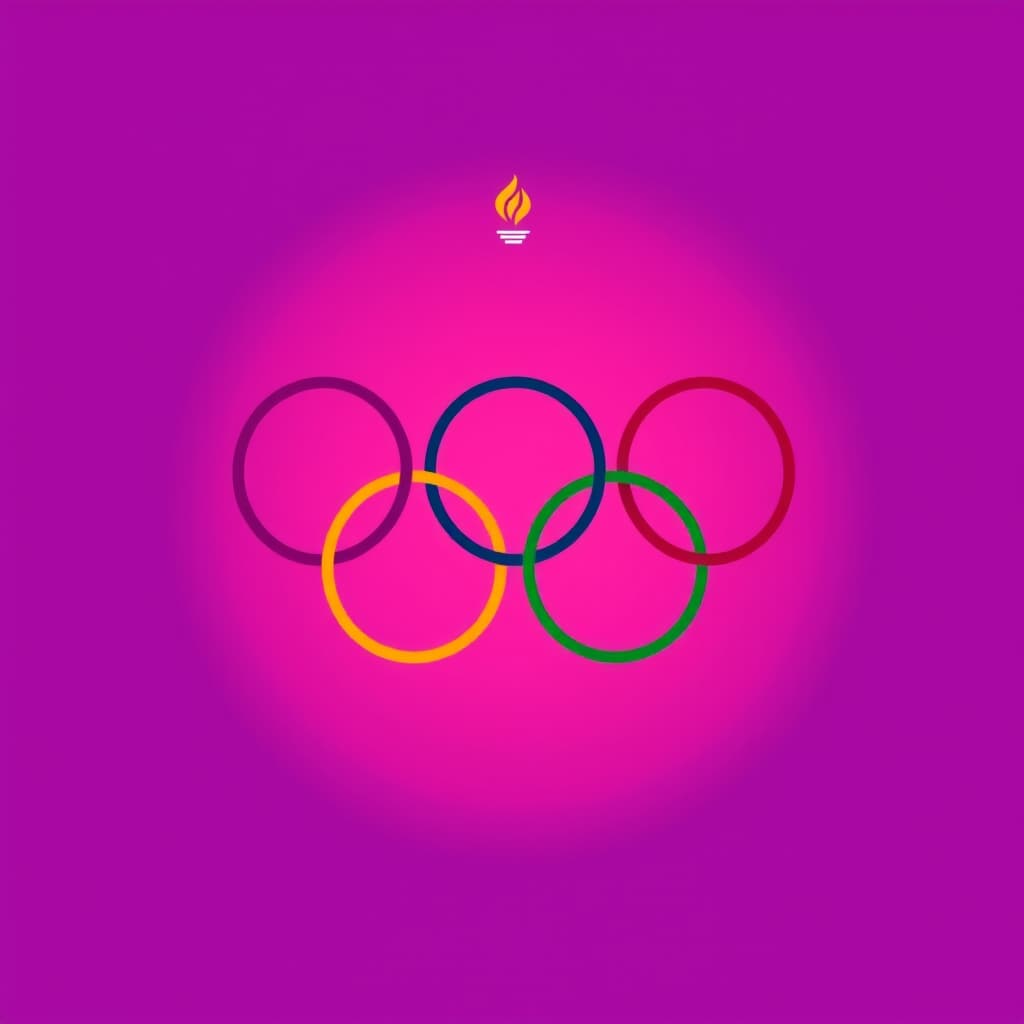
The question what do the olympic symbols represent comes up every time the opening ceremony starts, and it’s not just the rings. You’ll see the Olympic flag, the torch flame, the motto, and the cauldron—and each one carries a specific meaning tied to the idea of Olympism: sport as a shared, international spirit.
Below is a clear, practical breakdown of the main Olympic symbols, what they mean, and how to recognize them.
The Olympic rings: what they represent
The most recognizable Olympic symbol is the five interlaced rings (blue, yellow, black, green, and red) placed on a white background. The rings are used to represent the Olympic Movement and the meeting of athletes from around the world.
The rings represent the continents (and equality)
The Olympic rings symbolize the union of five continents:
- Africa
- Americas (often treated as North + South together)
- Asia
- Europe
- Oceania
A key detail: the rings are equal in size, which is used to express the idea that no continent is “bigger” or more important than another in the Olympic context.
Also, the rings are interlaced, representing the coming together of athletes from everywhere.
The colors: why blue, yellow, black, green, red?
When the Olympic rings are shown in the full color version, those colors (with the white background) are chosen so that the set appears across the flags of countries. The underlying message is that the Olympics are meant to be global and not tied to just one region.
In the official description used by the Olympic movement, the five colors are named and positioned consistently. The commonly given left-to-right order for the five-color version is:
- Blue
- Yellow
- Black
- Green
- Red
If you’ve ever wondered why people list the same five colors over and over—that’s why.
Quick copy versions you can paste
If you want something simple for notes, chats, or captions, you can copy these Unicode/ASCII stand-ins:
- Plain rings (text): ◯◯◯◯◯
- Interlaced-style idea (approx): (◎◎)(◎◎)
They won’t reproduce the exact official “interlaced” geometry perfectly (because Unicode lacks a true Olympic-rings glyph set), but they work as a visual placeholder.
Worked example: decoding a rings graphic
Imagine you see a banner with five equal rings, interlaced, and you’re trying to explain it to someone:
- Five rings → five inhabited continents
- Interlaced → unity / meeting / togetherness
- Equal size → equality of nations/continents
- Five colors + white background → global reach across the flags of countries
That’s essentially the full “translation” you need.
The Olympic flag: why the white flag matters
Another major Olympic symbol is the Olympic flag: a white field with the rings at the center.
What it represents is straightforward:
- The rings carry the meaning (continents + athletes meeting + unity)
- The white background acts as a clean contrast and also reinforces the “international” presentation—simple, recognizable, and consistent across events.
The Olympic flag is used ceremonially to represent the Games and the Olympic Movement itself, especially when nations and athletes come together.
If you want the official baseline description of the rings (which also drives flag use), see the IOC’s page on the Olympic rings.
The Olympic torch and flame: excellence, friendship, respect
The Olympic torch and the flame are among the most symbolic elements because they combine a physical ritual with values you’re meant to remember long after the event.
What the torch symbolizes
The torch relay is often discussed as creating anticipation and excitement, but the symbolic core focuses on the Olympic values.
Commonly stated themes include:
- Excellence (striving, training, competing at your best)
- Friendship (connection between athletes and nations)
- Respect (for others, rules, and the sport)
This doesn’t mean the torch is “just a mascot.” The relay is a moving reminder of the ideals the Olympics are supposed to stand for.
What the flame represents
The flame itself is treated as the enduring part of the ritual—something that continues from Games to Games. In ceremony language, it represents the Olympic spirit carried forward.
You’ll often see the flame compared to the ancient Greek tradition of fire at festivals, but the modern Olympic meaning is tied to the values above, not to literal mythology.
For a short history-and-meaning overview, you can also check: https://en.wikipedia.org/wiki/Olympic_torch
The Olympic motto: “Citius, Altius, Fortius”
Another symbol you’ll see in uniforms, signage, and ceremony readings is the Olympic motto:
Citius, Altius, Fortius
It’s usually translated as:
- Faster
- Higher
- Stronger
Even if you only remember one line, that’s it: the motto sums up the attitude of Olympic sport—improvement, discipline, and pushing limits.
You’ll notice it pairs well with the flame/torch idea: training and effort lead to performance, and performance is connected to respect and fair competition.
The Olympic cauldron: bringing it all together at the Games
The Olympic cauldron is the structure that holds the flame during the Games.
Its job is more than technical. Symbolically, it becomes the central focal point for:
- the opening ceremony climax (lighting the flame)
- the ongoing presence of the Games’ spirit in the host city
- the shared “center” that athletes and spectators recognize as this is happening here
Think of it like the flame’s home base—visible, ceremonial, and consistent.
Are there other Olympic symbols? Yes—but the rings lead
Depending on the context, people also refer to other emblematic items like:
- the Olympic emblem (often the rings used as a brand mark)
- the torch relay route and its local ceremonies
- the official Games visual identity (which changes by host city)
But if someone asks you what do the olympic symbols represent, the “core” answer is still the same set:
- Five interlaced rings → unity + continents + equality
- Olympic flag → the rings carried as the emblem on white
- Torch and flame → Olympic values (excellence, friendship, respect)
- Motto → faster, higher, stronger
- Cauldron → the flame as the Games’ ceremonial center
If you want to go one level deeper into how the rings are defined and used, Wikipedia has a long, well-referenced explanation: https://en.wikipedia.org/wiki/Olympic_symbols
Common misunderstandings (and the correct meanings)
Here are the questions people ask most often, and what you can say back.
“Does each ring stand for a specific continent?”
The official symbolism emphasizes five continents in total, but it doesn’t assign a single fixed continent to a specific ring color in the way many people assume.
The takeaway for most fans: there are five rings, and the message is union of the five continents, not a “color-to-continent map.”
“Do the rings mean the Olympics are only for certain countries?”
No. The meaning is meant to be universal. The colors were selected to be widely present across national flags, reinforcing that idea of global participation.
“Why are they interlaced?”
The interlacing is the visual shorthand for togetherness—athletes meeting, nations connected through sport, and the Olympic Movement bringing people into one shared event.
How to write a clear explanation in one paragraph
If you ever need a simple “assignment-style” answer, here’s a template you can adapt:
The Olympic symbols—especially the five interlaced rings—represent the Olympic Movement and the meeting of athletes from around the world. The five equal rings symbolize the union of the world’s five inhabited continents, and the interlaced design expresses unity and togetherness. The official ring colors (blue, yellow, black, green, red) together with the white background are chosen to reflect the Olympic idea of global reach. Other Olympic symbols like the torch and flame represent the core values of excellence, friendship, and respect, while the motto Citius, Altius, Fortius summarizes the spirit of striving to be faster, higher, and stronger.
Related EmojiCopy content you might like
If you’re building posts or caption packs around Olympic moments, these EmojiCopy sections can help:
- Explore emoji options for ceremonies and sports themes: /emoji-combos
- Find Unicode symbols you can use as visual separators or badges: /symbols
- If you like playful ceremonial graphics, browse /ascii-art
FAQ
What do the Olympic rings represent in simple terms?
The five Olympic rings represent the union of five continents and the meeting of athletes from around the world. The rings are interlaced and equal in size to communicate unity and equality.
Why are the Olympic rings five colors?
The five colors (blue, yellow, black, green, red) are selected along with the white background to reflect the Olympic movement’s global presence—the set was chosen so the colors appear across national flags. The point is international inclusiveness.
Do the Olympic rings correspond to specific continents by color?
Not in the way many people expect. The symbolism focuses on the total union of the five continents shown by the five rings, rather than a strict one-ring-to-one-continent mapping.
What do the Olympic torch and flame symbolize?
The torch relay and flame are tied to the Olympic values: excellence, friendship, and respect. The flame is also treated as the enduring ceremonial focus that continues through each Olympic Games.
What does the Olympic motto mean?
Citius, Altius, Fortius translates to Faster, Higher, Stronger. It’s meant to reflect the Olympic spirit of improvement, effort, and disciplined striving.
What does the Olympic cauldron represent?
The Olympic cauldron is the central ceremonial structure that holds the flame during the Games. Symbolically, it makes the Games’ spirit visible and provides a focal point from opening ceremony to competition days.